


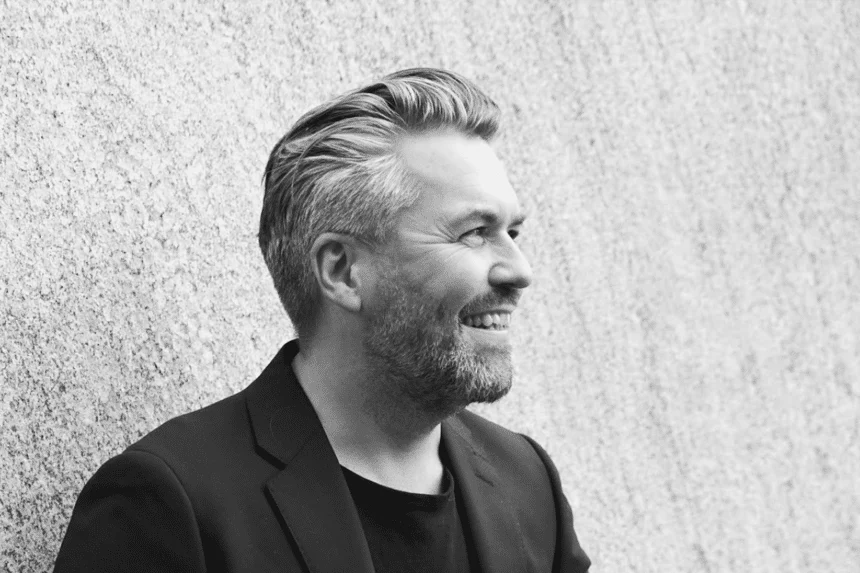

Nils Leonard: If I Could Do It Again, I’d Never Make Another Ad
If Nils Leonard, founder of Uncommon Studio, could do it all again, he’d never make another advert.
That may sound surprising for one of the most globally renowned men in advertising, but it is central to his thinking that a large portion of the industry is back-to-front.
If I could do it again, I’d never make another advert. Our whole studio is geared around what we call narrative objects and experiences, around a very different relationship with brands in general,” he told the Ad Council’s This Way Up conference in Sydney, dialiing in from London following a family emergency.
“Frankly, if I could have, I’d have bankrolled it totally differently knowing what I know now. I’d just make art and activism projects. You can make a lot of fucking money doing that—this isn’t me saying I want to be an altruistic, sat on the sidelines weirdo. I want to make a lot of cash, I just think you can do it in lots of different ways.
“There’s lots more visibility of companies like that than there was before. I think it’s an incredibly exciting time.. Look at the way the world is. Look at PR as a category—what does that even mean any more? Look at influencer as a category and ask yourself if anybody’s disrupted that. There are incredible places to play,” he added.
Leonard, of course, has made a lot of ads. Beginning his career in the late 90s, his CV reads like a who’s-who of the world’s top ad agencies with stints at TBWA, Y&R and AMV BBDO among others. He would become the chief creative officer of Grey London and its chairman in 2008, overseeing its most profitable and awarded years in the agency’s history and becoming one of the youngest agency chairmen in the world.
In 2017, he’d found Uncommon alongside Lucy Jameson and Natalie Graeme. Naturally, a slew of awards and recognition followed for work such as the Cannes Lion-winning ‘A British Original’ for British Airways.
But it’s perhaps ‘RATBOOTS’ that Leonard is most proud of.
Last year, Uncommon’s New York office created a pair of knee-high leather boots with a pair of taxidermied rats in cages between the base of the wearer’s foot and the sole. Yes, really. But more on this later.
Breaking out of the paradigms that the industry has created around the commercialisation of ideas might seem easier said than done. And you’re probably right – particularly in the age of AI. But Leonard thinks that creatives need to become bolder in selling the intangible value of their ideas and taste.
“Your task is to make work your clients love. Not just understand but fucking love what you have and move them,” he said.
“If someone gives me a million pounds to come up with an idea for them and I can’t tell them about that idea in a way that makes them have to do it, how could that be their fault? How could it be their fault if they’re paying for the idea?”
Nowadays, while many creatives spend time wringing their hands on LinkedIn about AI, Leonard said that now is the time for action to protect the craft and value in creativity.
“The person most likely to waste our time is us… That’s something to be really, really aware of. You can spend all your time reading horeshit on LinkedIn or you could learn the AI tools they’re talking about and incorporate them into your work. Move the fuck on from this entire debate. Imagine the time you got back from not wanging on about AI,” he said.
Instead, that wasted time spent on talking about AI could be spent gathering the information and references you need to guide the AI. When anyone can knock out any old shit, creatives will be defined by their ability to discern what is good and instruct AI to follow their lead.
“Style and taste are things in our industry that we don’t talk enough about. They’ve become weak words; they’ve become peripheral words. In the age of prompts, taste is going to become the differentiator. If everyone has access to everything, if everyone can ask for anything, everyone can build it, then the things you feed it with will be the differentiator,” he said.
“It can be helped by the excessive accumulation of high-quality inputs. That’s a really posh way of saying, the more stuff you collect, the more stuff you bring, the more stuff you grab, snipe, take and pull from places, the richer you will be and the more you will be able to push that taste into everything you do,” he said.
That understanding and wide-ranging cultural knowledge will help creatives help brands become famous—making creative and media budgets work far harder. In the process, this helps agencies become famous and simply make more money. But it requires a way of re-thinking how agencies make money.
“We could have gone even further,” said Leonard about his own work with Uncommon.
“I don’t believe many of us in this industry believe things are going to work. When you do all that stuff, you think about the mechanics of fame, if it’s built on friction, do I think it’s going to be famous, have I wrapped it right, is it sticky, is it something that someone will get their phone out and take a photo of?
“You have to believe it’s going to work. We thought RATBOOT would be famous because New York Fashion Week is a thing. We had no idea how big it was going to be. It had a 140 million views, we sold 100,000 ‘I Rat New York’ T-shirts. RATBOOT should be a line item on the agency’s P&L. It should be regular fixture at fashion shows. We just did it and it got us loads of talk.”
But that was that, Leonard said. It didn’t get any bigger for the studio.
“We fucking knew. And that’s true of so many projects… If we believed, it would have changed everything and we’d be a very different studio. We’d have a shorthand for fame and power that it’s taken us too long to learn. I wish we’d believed earlier.”
What’s a Rich Text element?
The rich text element allows you to create and format headings, paragraphs, blockquotes, images, and video all in one place instead of having to add and format them individually. Just double-click and easily create content.
Static and dynamic content editing
A rich text element can be used with static or dynamic content. For static content, just drop it into any page and begin editing. For dynamic content, add a rich text field to any collection and then connect a rich text element to that field in the settings panel. Voila!
How to customize formatting for each rich text
Headings, paragraphs, blockquotes, figures, images, and figure captions can all be styled after a class is added to the rich text element using the "When inside of" nested selector system.
Quote can go here
