


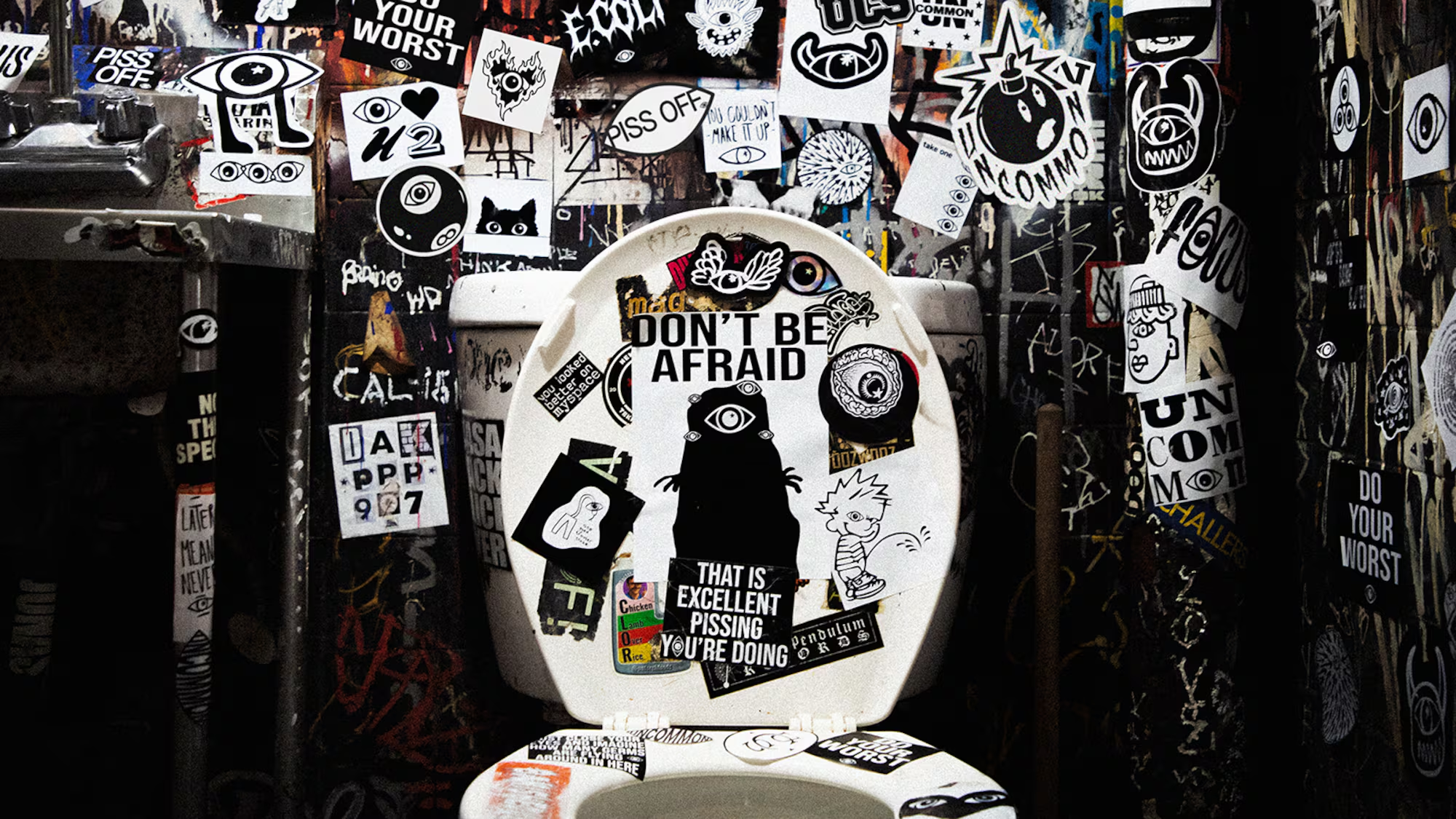

Uncommon proved design is essential for brands to stand out
In a world threatened by the AI-ification of creativity, Uncommon Creative Studio is proving that design is a front-line defense in standing out among the slop. Uncommon is Design & Branding Agency of the Year on Ad Age’s 2026 A-List.
Uncommon’s design practice is integrated within its creative studio, and is present starting at the pitch table across client work. While this has been true since the agency’s inception—its London office was founded in 2017, and its New York office in 2023—Uncommon leveled up its emphasis on design in 2025 when it hired Lisa Smith as its first global chief design officer.
Based out of Uncommon’s New York office, Smith, a former Jones Knowles Ritchie executive, was tasked with scaling Uncommon’s design business across markets. The agency noted design as one of its fastest-growing divisions, specifying 85% year-over-year revenue growth for its New York office that was driven by its integrated design and communications practice. In 2025, Uncommon added 16 new design clients including Chobani and Under Armour, according to the agency.
Smith, who has led brand transformations for the likes of Paramount, Walmart and Burger King, said Uncommon’s approach to design was unlike any of other agencies she’s worked at, where it was “a bit rinse and repeat in terms of, like, you could do something amazing, it takes a year or two to settle in … and then [you train] the [client’s] in-house [staff], make guidelines and you’re out,” she said. Instead, she likened the Uncommon experience to building the in-house creative team at Chobani, where design was core from packaging to marketing, and “no touchpoint was left unturned with a thoughtful approach.”
“You don’t come to [Uncommon] for an incremental shift in your shade of blue,” said Smith. Brands “come to us to be a lot braver and to stand out in the category that they’re in.”
Uncommon’s baked-in design was exemplified by work for London Museum and The Ordinary last year. For London Museum, the agency created “Grit and Glitter,” a rebrand campaign that included a new design system encompassing logo, icon, typefaces and toolkit. Based on surveying 500 Londoners, the provocative work centered around a pigeon and its excrement, referencing the city’s multifaceted nature.
The campaign’s core image—the pigeon—was sculpted out of clay collected from the Thames and painted plain white so that it could shape-shift just like the museum’s collection. Since launch, versions of the pigeon have been designed to celebrate Diwali, Easter and the London Marathon, and a broader campaign featured 33 different pigeon designs created by 33 local artists.
“The terminology that is often just for the design department is actually for all of us,” said Sam Shepherd, chief creative officer at Uncommon New York. London Museum’s pigeon sculpture, for example, was born from the assignment to create a logo, but it was also implemented as a narrative device to carry across the brand’s storytelling and marketing, Shepherd and Smith said.
“That’s what gets designers so fired up … it’s built to live beyond just the guidelines of a brand book; it is meant to be seen and shared by people outside of just the creative community,” said Shepherd.
Uncommon’s work for beauty brand The Ordinary activated design across various media types, including digital and in-person activations. Based on the brand’s core tenet of transparency, Uncommon’s integrated teams built multiple activations to expose harmful beauty industry practices.
“The WikiLeaks of Beauty” is an online archive of scientific papers containing insider knowledge on topics ranging from clean beauty to animal testing. The project drove a sales increase of between 10% and 15% during the campaign window, according to the agency. Another digital activation, “The Periodic Fables,” revamped the Periodic Table format to expose buzzwords pushed by the beauty industry.
An in-person activation in New York brought attention to the key behind all of the beauty industry’s trends and fads—money. “The Secret Ingredient” was a giant pile of cash, adding up to $10 million, that visualized the resources funneled into celebrity endorsements common across skincare marketing. The activation provided a 26% awareness lift and 27% consideration lift among New Yorkers, the agency said.
“The colors, the typography, the design system—we all love to geek out on systems, and that’s what makes designers specialists at what they do,” said Smith. “But unlocking that thing hidden in plain sight and finding the actual narrative storytelling—those are the things that we try to push ourselves on with every client that we work with.”
What’s a Rich Text element?
The rich text element allows you to create and format headings, paragraphs, blockquotes, images, and video all in one place instead of having to add and format them individually. Just double-click and easily create content.
Static and dynamic content editing
A rich text element can be used with static or dynamic content. For static content, just drop it into any page and begin editing. For dynamic content, add a rich text field to any collection and then connect a rich text element to that field in the settings panel. Voila!
How to customize formatting for each rich text
Headings, paragraphs, blockquotes, figures, images, and figure captions can all be styled after a class is added to the rich text element using the "When inside of" nested selector system.
Quote can go here
